Printer Prints Blank Pages Troubleshooting: How to Fix It Quickly and Easily
When a printer suddenly starts producing blank pages, most people assume the ink has finished — but that’s rarely the whole story. In many cases, the printer is trying to print, the paper feeds normally, but ink simply doesn’t reach the page. This guide explains the real reasons behind blank pages and shows you how to fix them using the same practical diagnostic steps professional technicians follow.
A simple test page often reveals more about your printer’s condition than you might expect.
Why Does Your Printer Print Blank Pages?
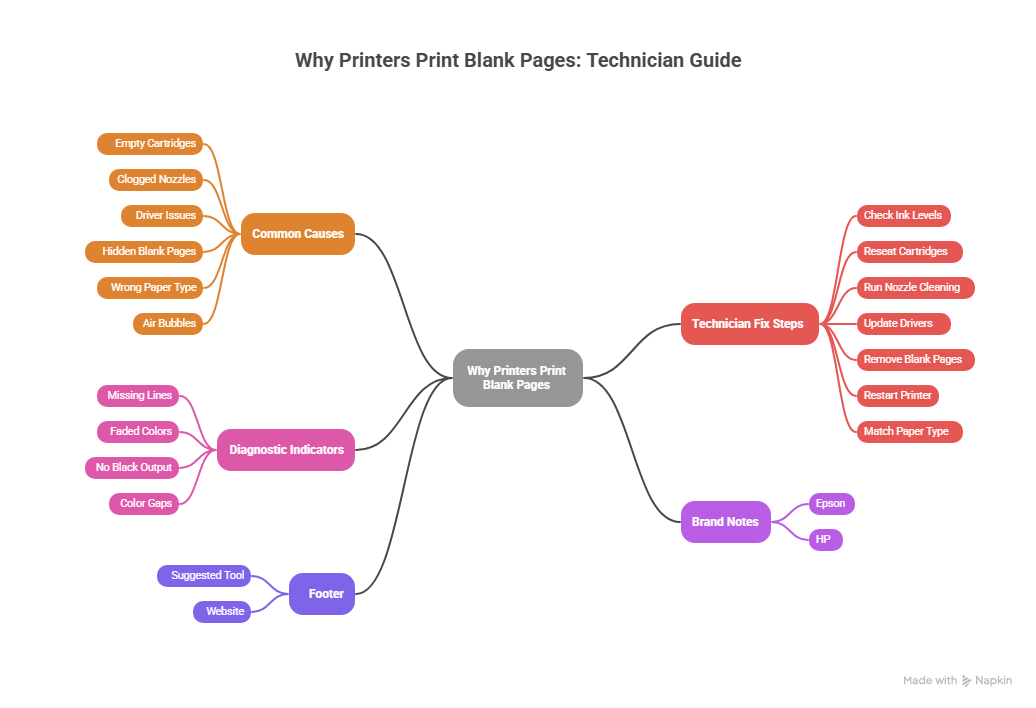
Blank pages typically happen because of:
- Empty or faulty cartridges
- Clogged nozzles or blocked print heads
- Driver or software errors
- Hidden blank pages in documents
- Incorrect paper settings
- Air bubbles in the ink path
Step 1 — Check Ink or Toner Cartridge Levels
Check your printer software for ink status, replace low cartridges, and make sure no protective tape is attached. If your printer prints blank pages but prints a test page correctly, run a color test page to confirm ink flow.
Step 2 — Reinstall or Reseat Cartridges
Loose or partially seated cartridges often cause blank output. Turn off the printer, remove cartridges, clean the contact points, and reinsert firmly until they click.
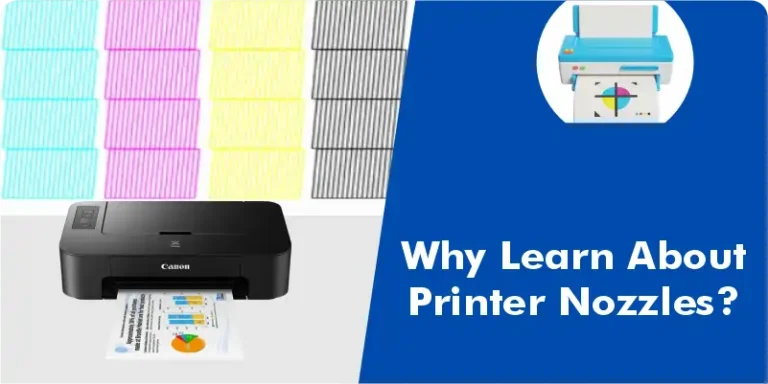
Step 3 — Clean Inkjet Printer Nozzles or Print Heads
If you own an Epson printer, blank pages often mean severely clogged nozzles. Run the cleaning utility, then print a test page. If color blocks appear faded or lines are missing, you may also be experiencing a color mismatch — explained here: fix printer color mismatch.
Clogs are also affected by color flow and mixing, so this guide may help: why color mixing matters.
Step 4 — Update or Reinstall Printer Drivers
Driver miscommunication sometimes sends an empty ink layer, causing blank pages. Download the latest drivers from HP or Epson, install them, restart your PC, then restart the printer.
Step 5 — Check Your Document for Hidden Blank Pages
Use print preview, look for extra blank pages, and remove accidental page breaks.
Step 6 — Restart Your Printer and Computer
A proper restart fixes temporary ink and firmware communication issues.
Step 7 — Check Paper Size and Type Settings
Using “Photo Paper” settings while printing on “Plain Paper” can suppress ink output entirely on some models. Always match the settings with the actual paper.
Brand-Specific Insights
Epson Printers
Known for nozzle clogs. Always verify with a nozzle test page.
HP Printers
Often fixed by reseating cartridges, running alignment, or reinstalling drivers.
Quick Summary — Fixing Blank Pages
- Check and replace faulty cartridges
- Reseat cartridges properly
- Clean nozzles
- Update drivers
- Remove hidden blank pages
- Restart printer and PC
- Ensure paper settings match
FAQs
Why is my printer printing blank pages when it has ink?
Usually clogged nozzles or loose cartridges. Run a test page to confirm.
Why does my printer sound like it’s printing but nothing appears?
Ink isn’t reaching the paper — often a blockage or trapped air bubble.
How do I stop my printer from printing blank pages?
Check ink levels, clean nozzles, reinstall cartridges, update drivers, and remove hidden blank pages.
Why is my HP printer not printing even with ink?
HP printers commonly need cartridge alignment or updated drivers to fix blank outputs.